A mature tree contains a startling amount of material. People picture the trunk and forget that a full canopy of brush, branches, and leaves has to go somewhere too. When a sixty foot tree comes down, what's lying on your lawn is a volume that surprises almost everyone standing there watching it happen.
So it's a fair question, and one worth asking before you hire anyone rather than after: what actually happens to all of it? Wood chipping after tree removal handles most of it, but not all, and what's included varies more between companies than homeowners realize.
This matters because the difference between a job that ends with a clean yard and one that ends with a pile behind the garage is usually a conversation nobody had at the estimate. Here's how the material breaks down, what normally happens to each part, and the specific questions worth asking so you're not surprised on the day.
Brush Becomes Chips
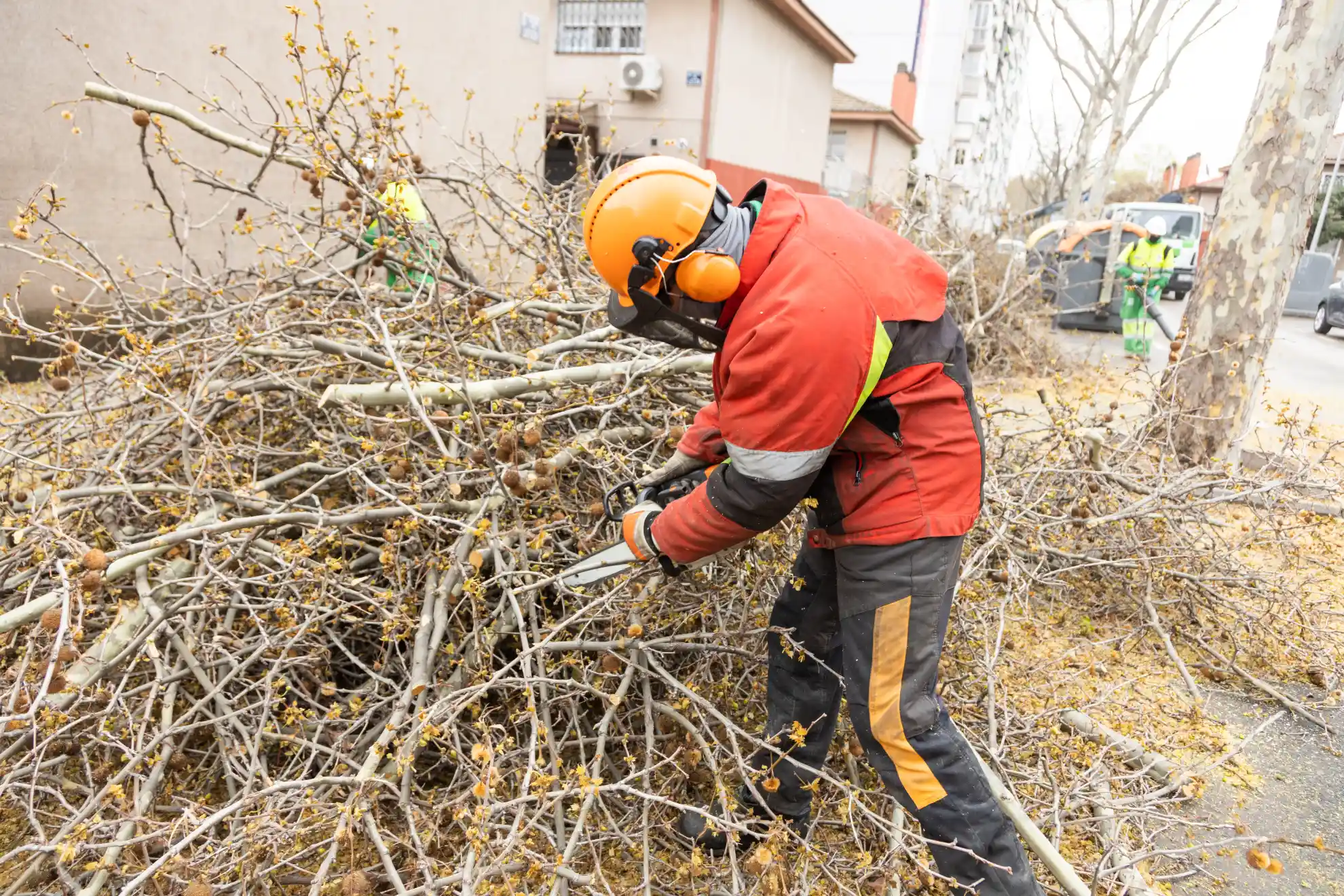
The branches and leafy material, which is most of the volume, go into a chipper on site. It shreds everything down to wood chips, which reduces the bulk enormously and means far fewer truck trips off the property.
Those chips have somewhere to go. Most of the time they leave with the crew. But if you want them, they're genuinely useful: chips work well as mulch on paths, around the base of established trees, and in natural areas where you don't need the finished look of hardwood mulch.
Worth saying, fresh chips aren't ideal for planting beds right away. They're better on paths and rough areas until they've aged.
"The difference between a job that ends with a clean yard and one that ends with a pile behind the garage is usually a conversation nobody had at the estimate."
The Logs Are a Separate Decision
Trunk sections are too big to chip, so they're cut into rounds and handled separately. This is where you have a real choice.
They can be loaded and hauled away, which is what most people want. They can also be cut to length and stacked on the property if you burn wood, which on a larger lot is worth asking about, since you're getting firewood out of a tree you were paying to remove anyway.
What you don't want is the ambiguous middle: logs left in a pile at the edge of the lawn with no plan. That's how a tree removal turns into a second project six months later.
What Cleanup Should Actually Mean
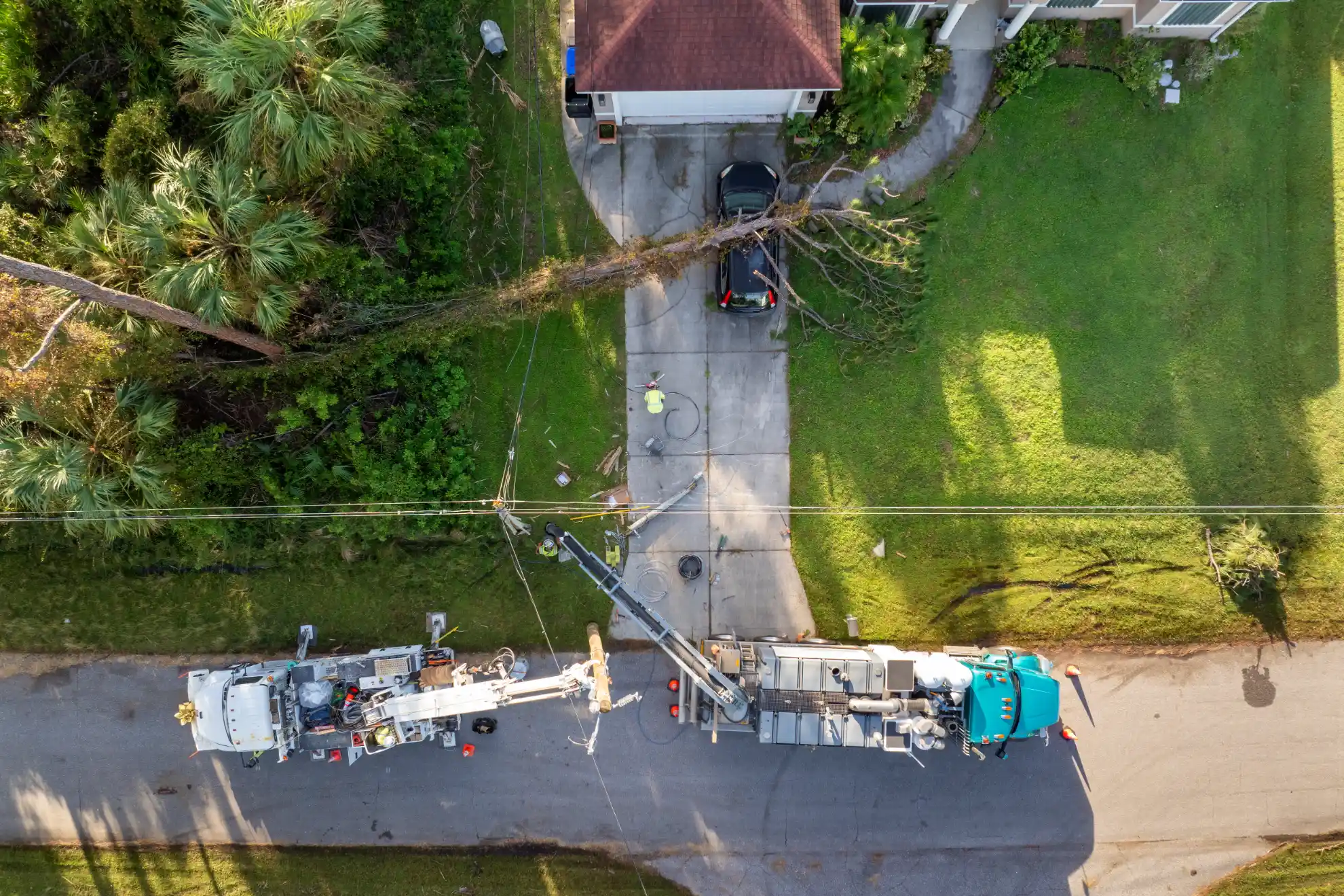
Full cleanup means the brush is chipped, the logs are handled per whatever you agreed, and the work area is raked out before the crew leaves. On a lawn that means going over it for the small pieces that scatter during the cut. On a driveway or a walk it means the surface gets cleared.
What it does not automatically include is the stump. Stump grinding is usually quoted as a separate service, and it's the single most common surprise after a tree removal. Ask directly whether it's part of the quote you're looking at, whoever you hire.
Ask about ruts too, especially if the ground is soft. Our tree services quotes name what's included and what isn't in writing, because the fastest way to a bad review is a homeowner who thought something was covered and it wasn't.
Questions to Ask Before You Hire
Four questions save most of the confusion. Is the brush chipped on site or hauled whole? What happens to the logs, and can they stay if I want them? Is the stump included or quoted separately? What condition is the lawn expected to be in when you leave?
None of these are difficult questions and any established company should answer them plainly at the estimate. If the answers are vague, that vagueness usually shows up later as work you assumed was included.
Getting all four settled up front is the difference between a removal that ends and one that leaves you with a list. If a tree came down on your property in a storm, emergency tree services follows the same rules — chips, logs, cleanup, all named before the crew starts. You can also contact us to walk through a specific job.