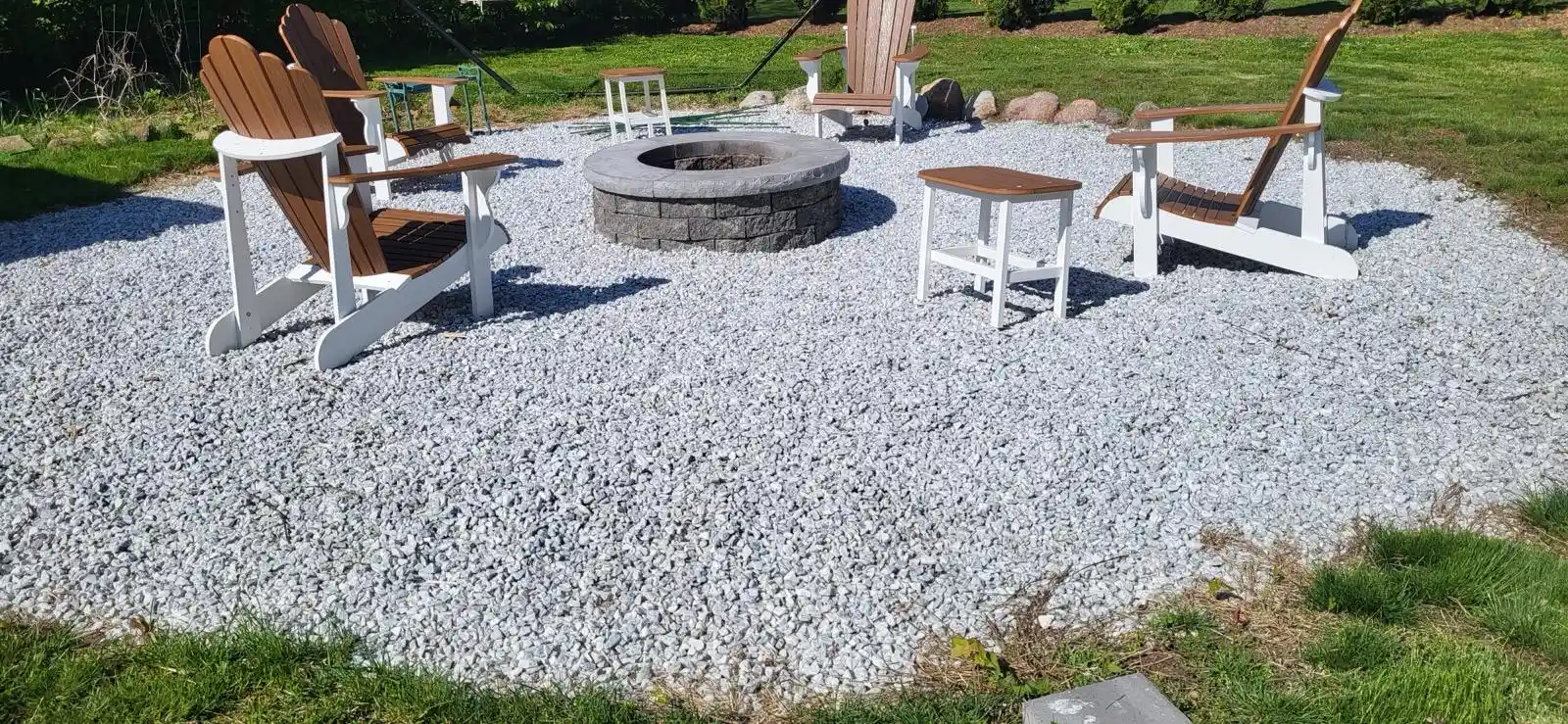
If you’re planning a new patio, the pavers vs natural stone patio question usually comes up early. Both can look great, handle years of use, and add real value to your outdoor space. But they differ in style, cost, installation, and long term care, and those differences matter.
In Connecticut, the decision also has to account for winter. Freeze and thaw cycles, snow shoveling, and heavy spring rain all test a patio. The material you choose, and how it’s installed, decides how your patio ages. It can stay flat for decades or start shifting after a few seasons.
This guide compares pavers and natural stone on the points that matter most. You’ll learn how they look and what affects cost. You’ll also see how each one handles Connecticut weather and what maintenance to expect. By the end, you’ll have a clear sense of which patio fits your home and budget.
Look and Style
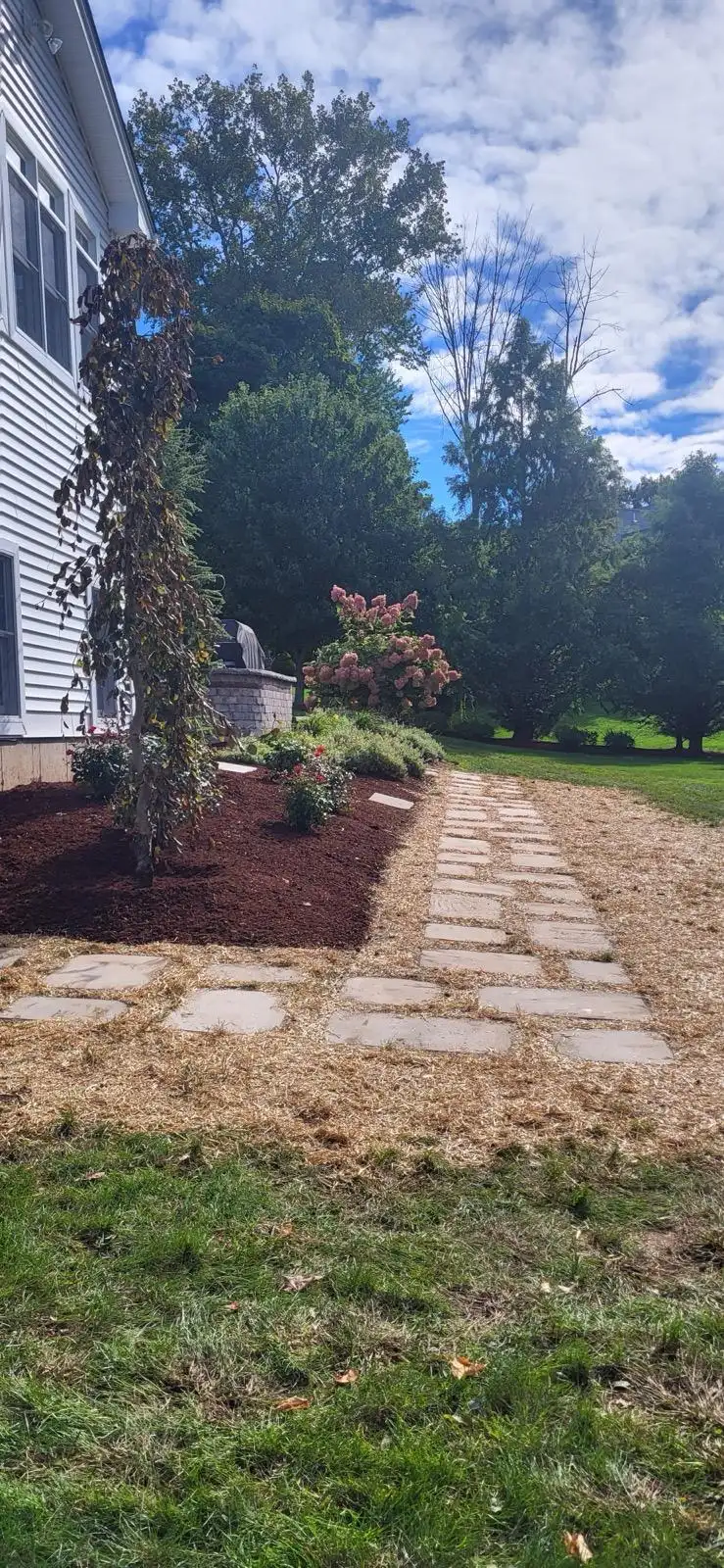
Pavers are manufactured units, usually concrete or clay brick, made in consistent shapes, sizes, and colors. That uniformity makes it easy to create clean patterns like herringbone, running bond, or basketweave. Pavers come in a wide range of colors and textures, including styles that mimic natural stone. They fit well with modern homes and tidy, structured landscapes. Natural stone, like bluestone and flagstone, is cut from the earth. Every piece is a little different in color and texture. That variation gives a patio a timeless, organic look that suits older Connecticut homes, colonial styles, and wooded lots. If you want crisp patterns and consistency, pavers usually win. If you want one of a kind character, natural stone is hard to beat.
Cost and Installation
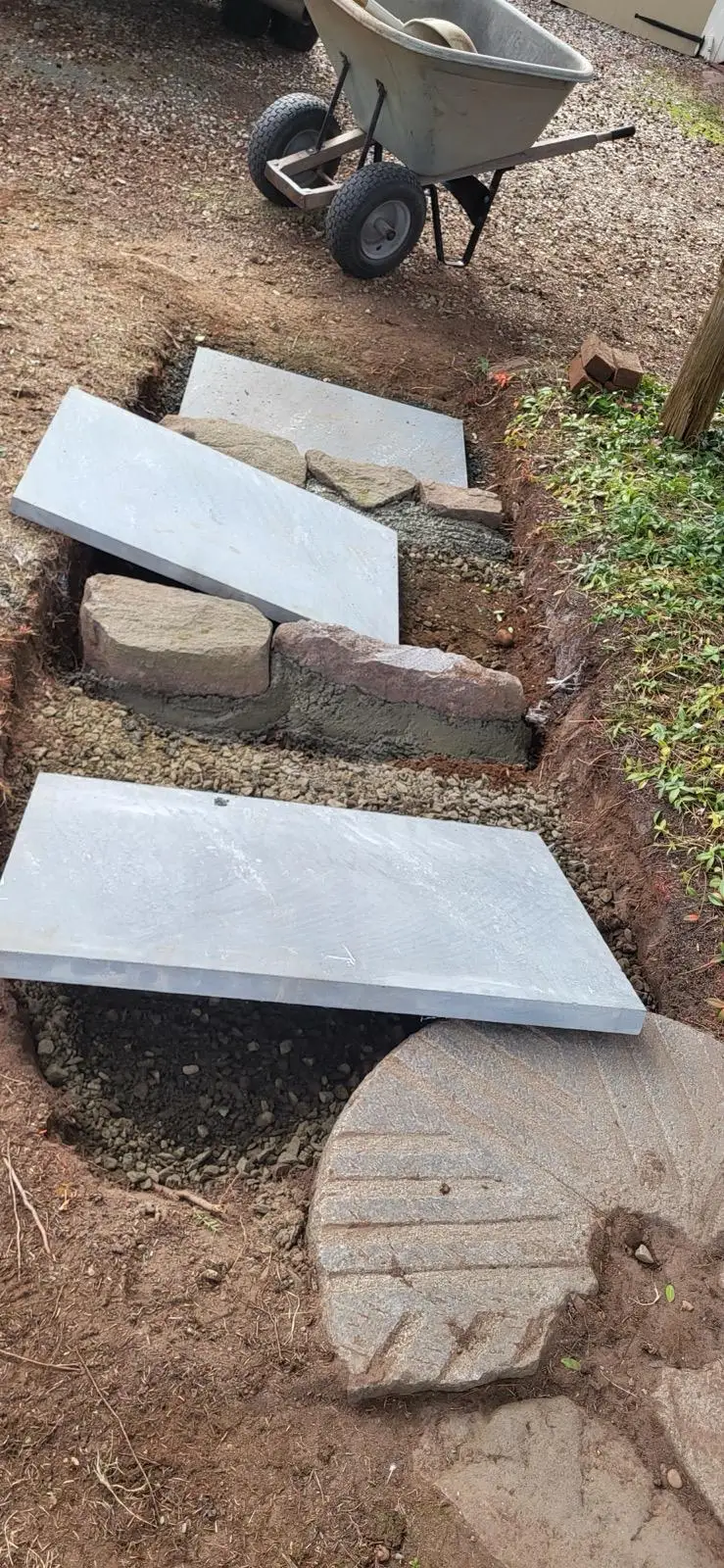
Pavers usually cost less than natural stone for materials. Their uniform size also speeds up installation, since they fit together without much custom cutting. Natural stone costs more to buy, and irregular pieces take more time to cut and fit, which adds labor. Cut bluestone in regular rectangles falls somewhere in between. For both materials, the base work underneath is a big part of the cost. Excavation, compacted gravel, a bedding layer, and edge restraints are the same whether you choose pavers or stone. That base is also what decides how long the patio lasts. When comparing quotes, look at what’s included below the surface, not just the price of the top layer.
Durability in Connecticut Winters
Both pavers and natural stone can last for decades in Connecticut when they’re installed on a proper base. The real enemy is water. When water collects under a patio and freezes, it expands and pushes pieces up or out of place. A deep, compacted gravel base and good drainage prevent that. Pavers have one advantage here. If a paver cracks or shifts, it can be lifted and replaced individually, and the repair blends right in. Natural stone is very strong. Still, some stones can flake or chip on the surface after years of freeze and thaw. Stone repairs are also harder to match. For either material, careful snow removal with a plastic shovel helps protect the surface.
Maintenance Over the Years
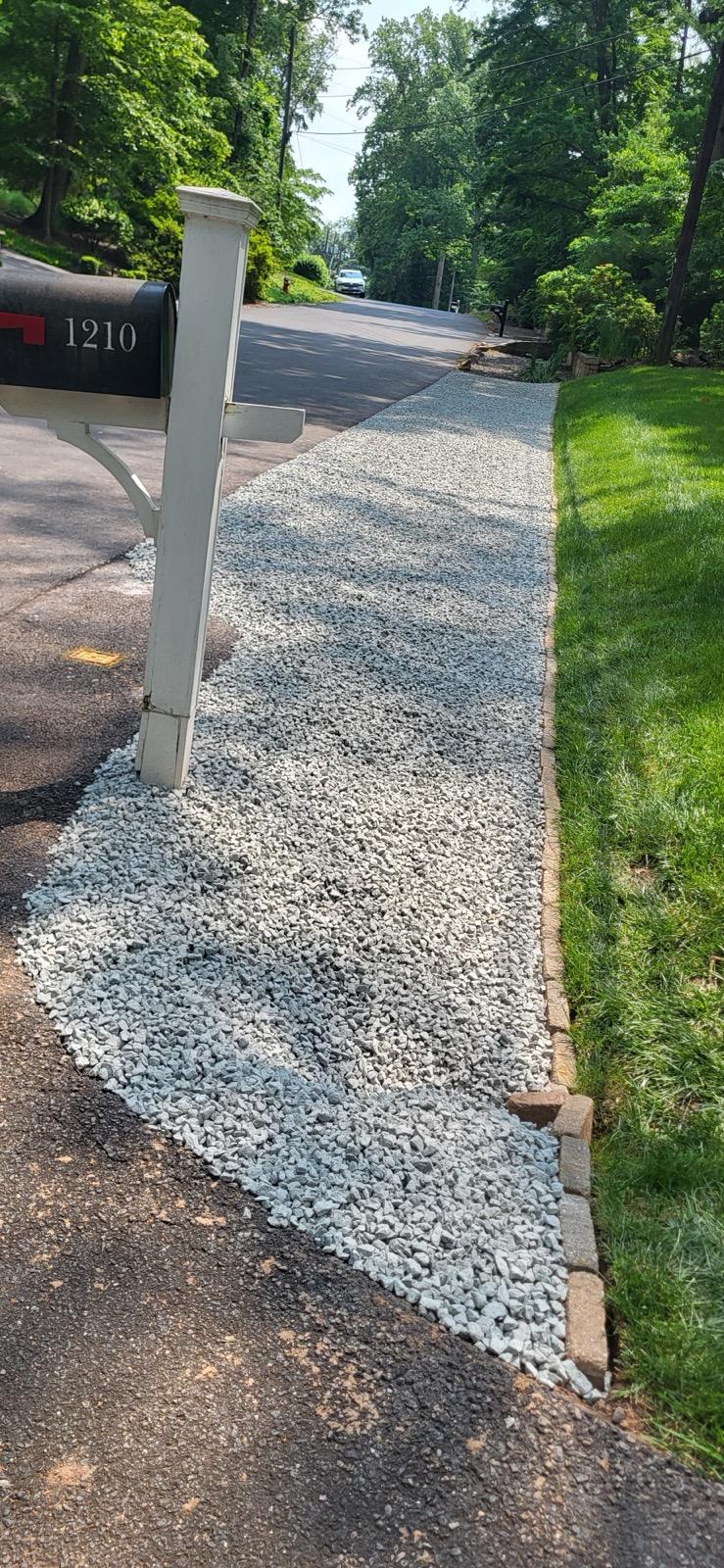
Neither patio needs much maintenance, but they do need some. Paver joints are usually filled with sand, which can wash out over time and let weeds sprout. Topping up the joint sand every few years keeps pavers locked tight. Some homeowners also choose to seal pavers to protect the color, though it’s optional. Natural stone patios with sand or gravel joints need similar care. Stone set in mortar has fewer weed problems, but cracked joints eventually need repair. Both surfaces benefit from occasional cleaning to remove moss, leaves, and stains. The most important maintenance happens before the patio is built. A solid base and proper drainage prevent the sinking and heaving that cause real repair bills later.