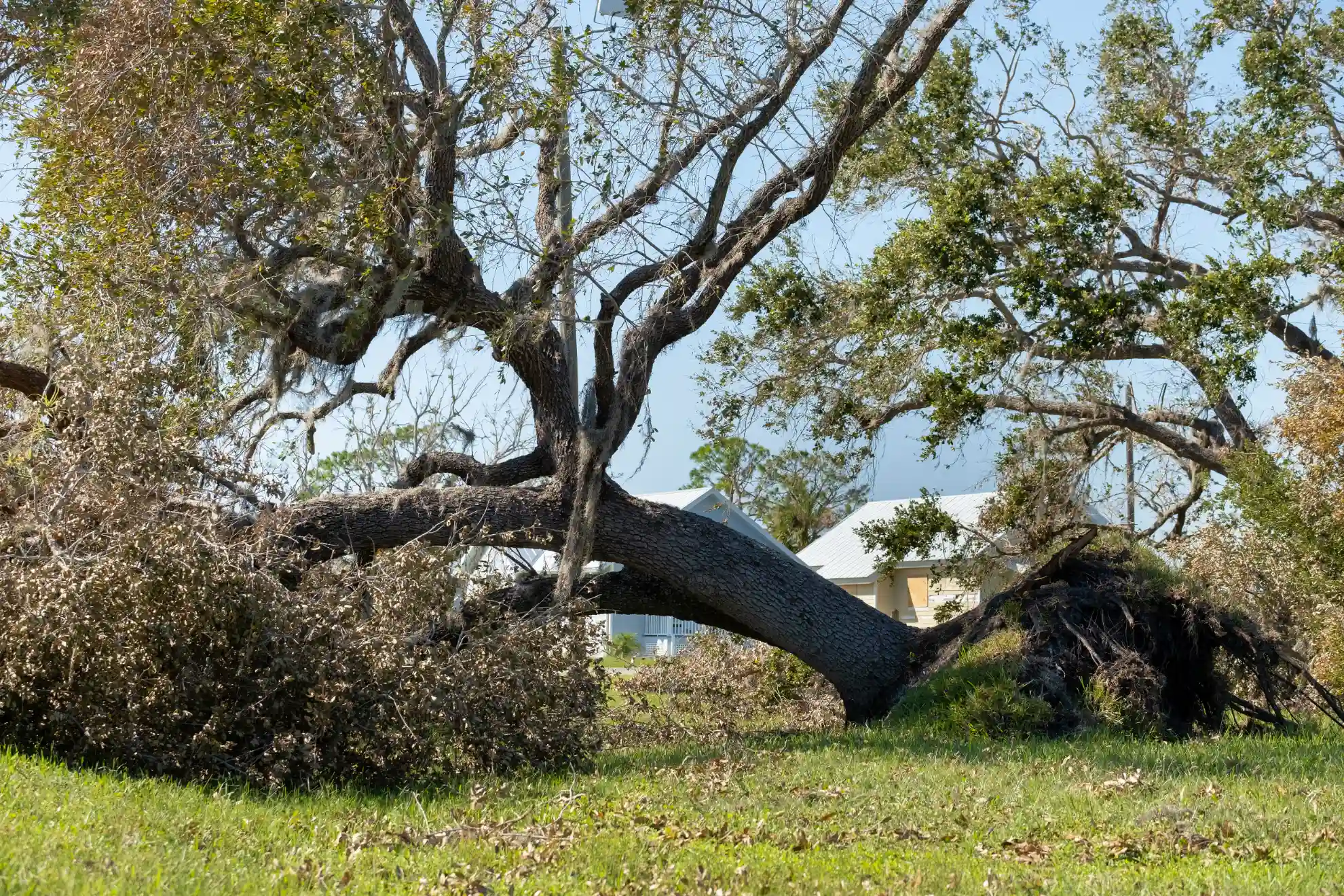
A leaning tree can make anyone nervous, especially when it hangs over your roof, driveway, or the kids’ play area. But not every lean means trouble. Plenty of trees grow at an angle for decades and stay stable. The real question is whether the lean is new, getting worse, or showing other leaning tree warning signs.
In Connecticut, that question comes up a lot. Heavy snow, ice storms, nor’easters, and soaked spring soil all put stress on trees. Add years of pest damage to oaks and ash. A tree that looked fine last fall can become a real risk this spring. Knowing what to look for helps you act before a storm forces the decision.
This guide walks you through the signs that matter and the ones you can usually ignore. It also covers when to call a professional. You’ll also learn what happens next. The answer might be trimming, removal, or simply keeping an eye on the tree for another season.
Natural Lean vs. New Lean: What’s the Difference?
Start by figuring out how long the tree has been leaning. A tree that grew toward the sun over many years usually has roots and wood that adapted to that angle. Its trunk often curves back upward near the top, and the soil around the base looks undisturbed. That kind of lean is rarely urgent. A new lean is different. If a tree stood straight last year and tilts now, something changed below ground. Roots may have snapped in a storm, rotted from disease, or lost their grip in waterlogged soil. That kind of lean deserves attention right away, especially if the tree could reach your house, garage, or driveway. Old photos help here. Compare the tree to pictures from past years and check whether the angle has changed.
Warning Signs at the Base and Roots
Most leaning trees fail at the roots, so look closely at the ground first. Soil that’s cracked, heaved, or mounded on the side opposite the lean is one of the clearest danger signs. It means roots are pulling out of the ground. Exposed or broken roots, especially after a storm, point the same way. Mushrooms or other fungal growth at the base can signal root rot. That’s true even when the canopy still looks green. Also check for soft, crumbly wood where the trunk meets the soil. In Connecticut, ground that stays soaked after spring rain or snowmelt makes these problems worse. Wet soil can’t hold roots as firmly. If you see any of these signs on a tree near your home, it’s time for a professional inspection.

Warning Signs in the Trunk and Canopy
Above ground, start with the trunk. Deep vertical cracks, splits, or seams are serious, especially on the side of the lean. Cavities, peeling bark, and sections that sound hollow when tapped can mean the trunk has lost strength. Next, look up into the canopy. Large dead branches, thin leaves on one side, or a crown that leafs out late all suggest decline. Many Connecticut oaks were weakened by years of spongy moth damage. The emerald ash borer has killed a large share of ash trees. A declining tree that also leans is a bigger risk than either problem alone. Finally, notice where the weight sits. A heavy crown on the leaning side puts constant stress on the roots holding the tree up.
Trimming, Removal, or Wait and Watch?
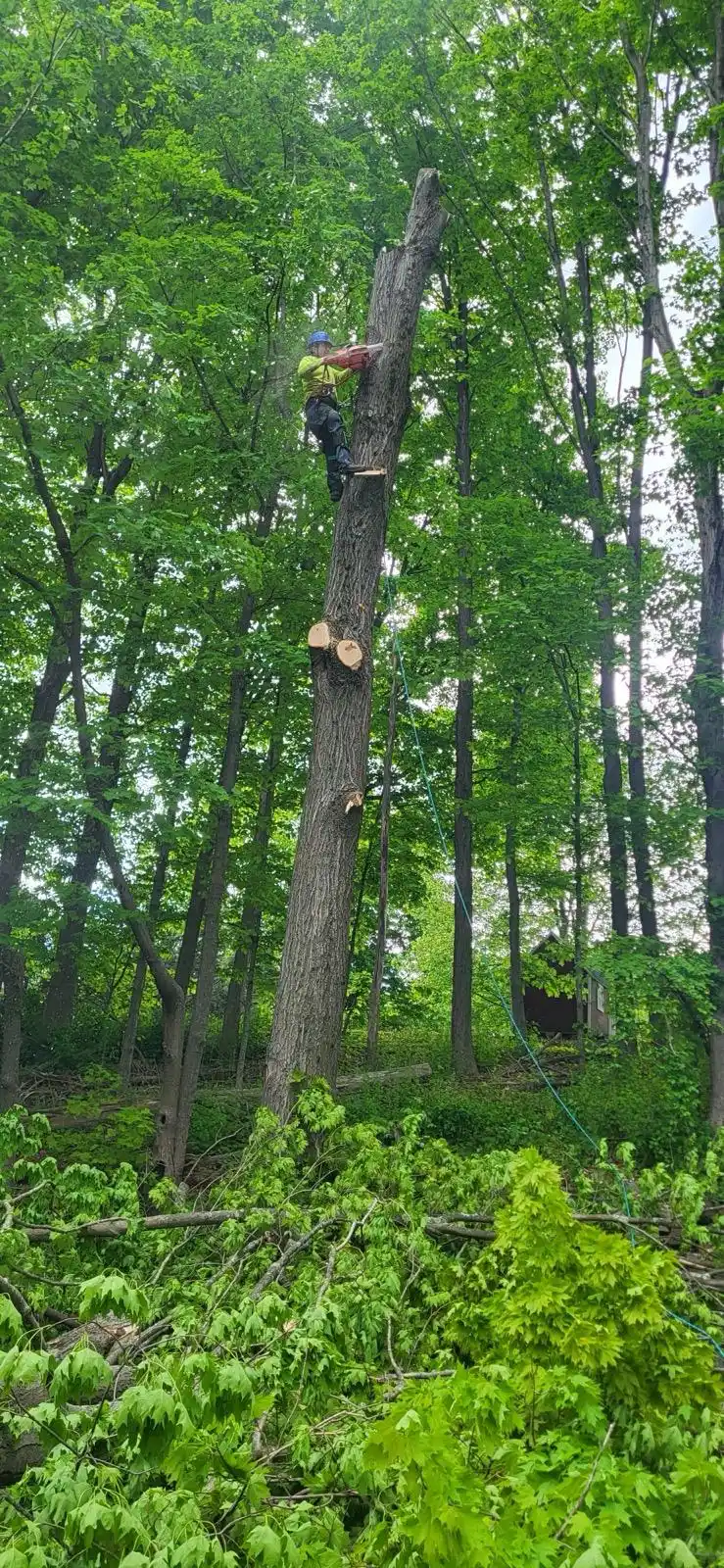
Once a professional inspects the tree, there are usually three paths forward. If the tree is healthy and the lean is old and stable, monitoring it may be all you need. If the tree is sound but top heavy, tree trimming can reduce weight on the leaning side. That eases the load on the roots. If the roots are failing or the trunk is cracked, tree removal is the safer choice. The same goes for dead or dying trees. Near a house, removal happens in controlled sections, so nothing falls where it shouldn’t. Whatever the answer, don’t let the next big storm decide for you. A leaning tree is much easier to handle on your schedule than after it falls on something you care about.