If you see water pooling in your yard after every storm, you’re not alone. Puddles that sit for days, soggy spots, and mud near the foundation are common complaints. Connecticut homeowners deal with them every season. They’re also easy to ignore until the lawn dies or water starts heading toward the house.
Connecticut yards face a tough mix. Heavy clay in some towns, ledge close to the surface in others, and spring snowmelt all slow down drainage. Older homes often have grading that settled years ago, and downspouts that dump roof water right next to the foundation.
The good news is that standing water almost always has a clear cause. Once you know where the water comes from and why it stays, the fix gets simple. This guide covers the most common causes and why pooling matters. It also explains the fixes that work and what to check before calling a professional.
The Most Common Causes of Standing Water
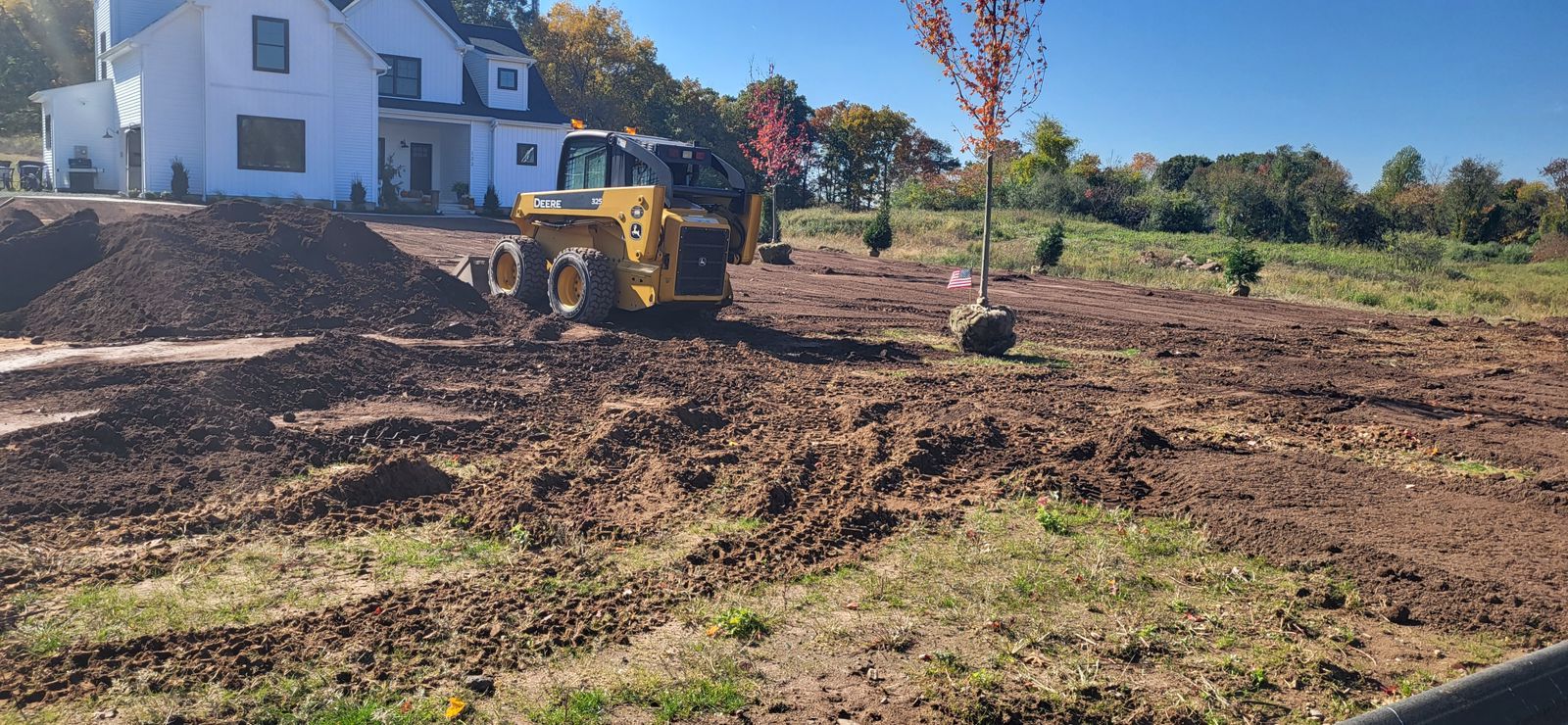
Poor grading tops the list. Over time, soil settles around foundations, patios, and walkways, creating low spots where water collects instead of flowing away. Compacted soil is next. Years of foot traffic, mowing, and construction squeeze the air out of the ground, so rain can’t soak in. Heavy clay soil causes the same problem, and it’s common in parts of Connecticut. Downspouts are another big one. A single roof sheds a lot of water. A downspout that empties onto the lawn creates a soggy patch every time it rains. Finally, some yards have ledge or a high water table close to the surface. In those spots, water simply has nowhere to go, no matter how the lawn is graded. Most pooling problems come from one or two of these causes working together.
Why Standing Water Is More Than an Eyesore
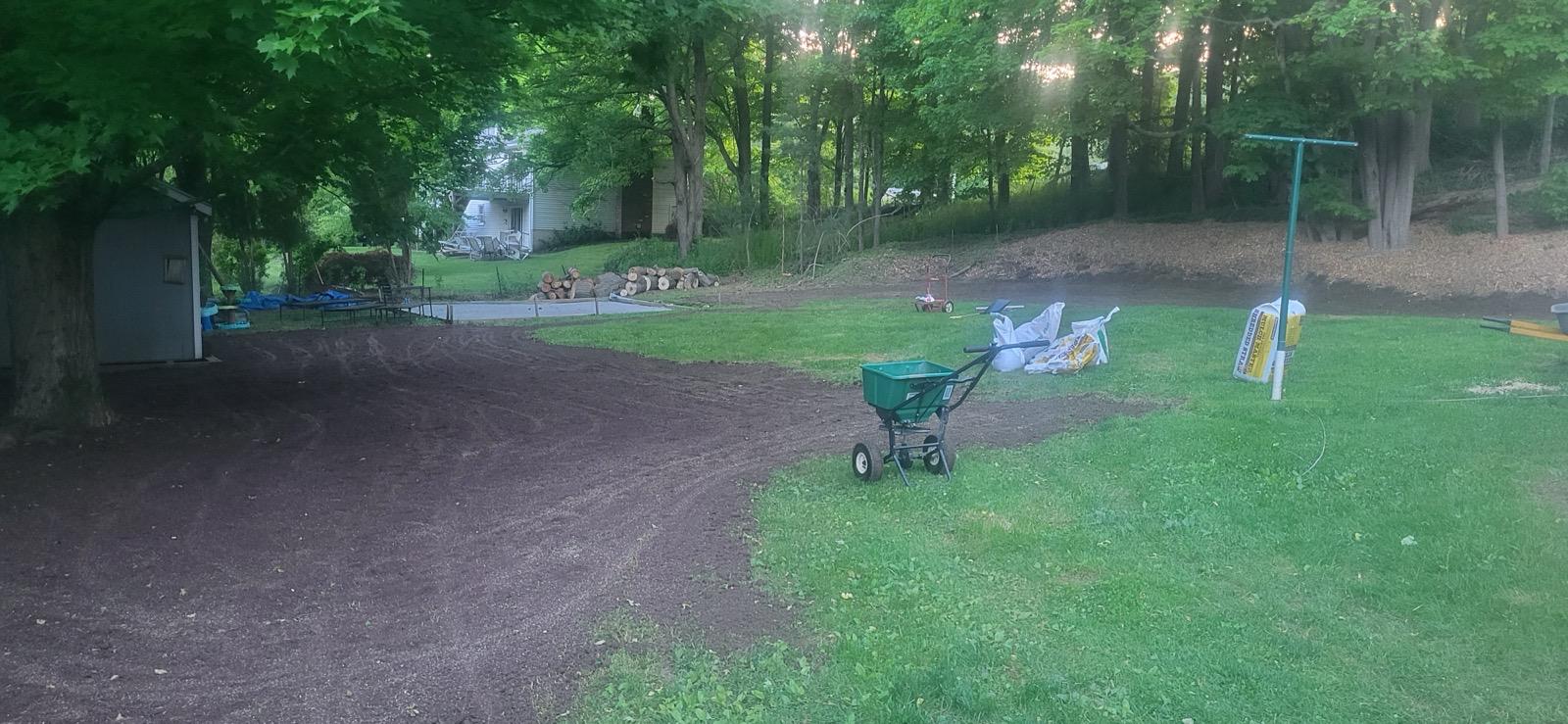
A puddle might look harmless, but standing water causes real damage over time. Grass drowns when its roots sit in water, leaving bare, muddy patches that weeds quickly take over. Tree and shrub roots can rot in soil that never dries out. Standing water also gives mosquitoes a place to breed during warm months. The bigger concern is your home. Water that pools near the foundation can find its way into basements and crawl spaces. In Connecticut winters, water trapped under walkways and patios freezes, expands, and pushes stones and pavers out of place. On slopes, runoff that has nowhere to go washes out soil and mulch. Fixing the drainage early is almost always easier than repairing the damage it causes later.
Fixes That Actually Work
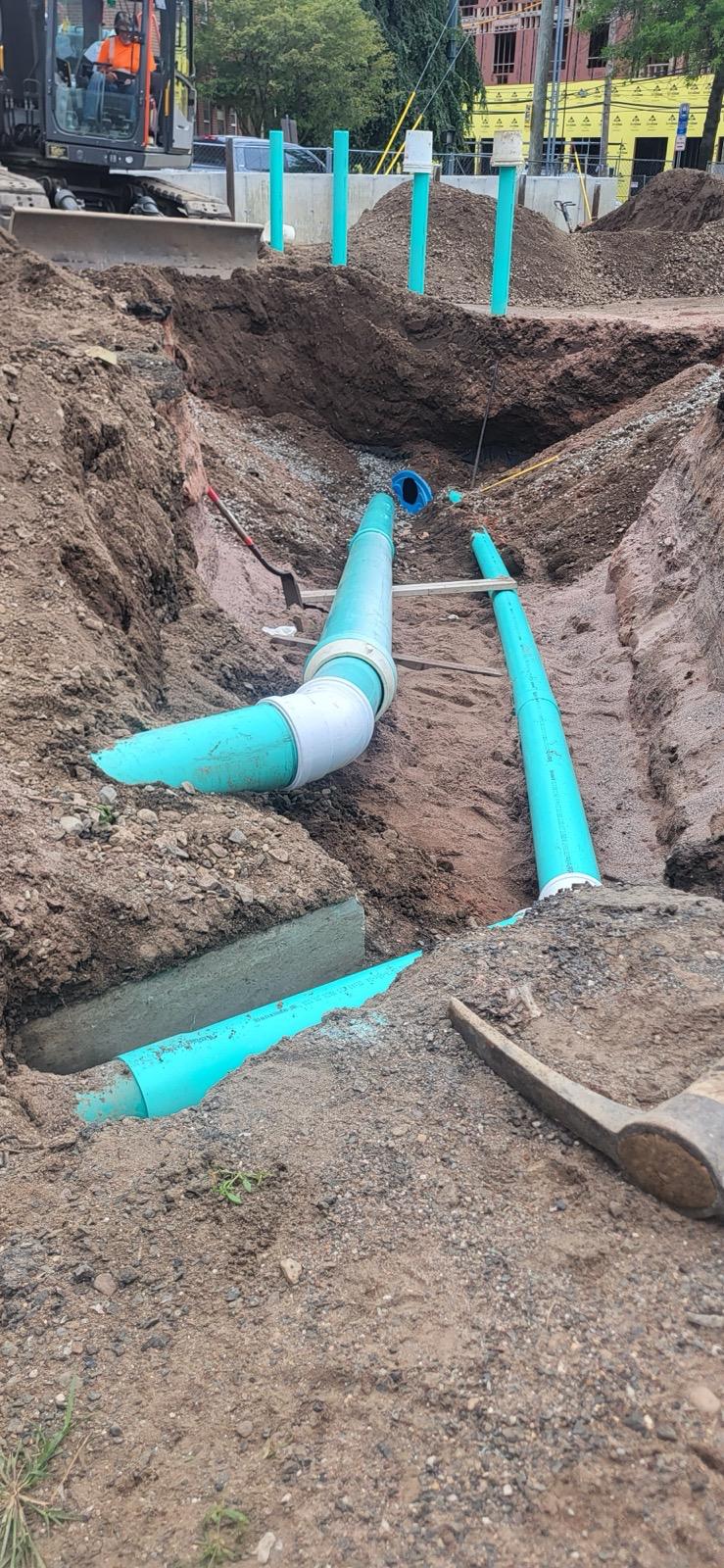
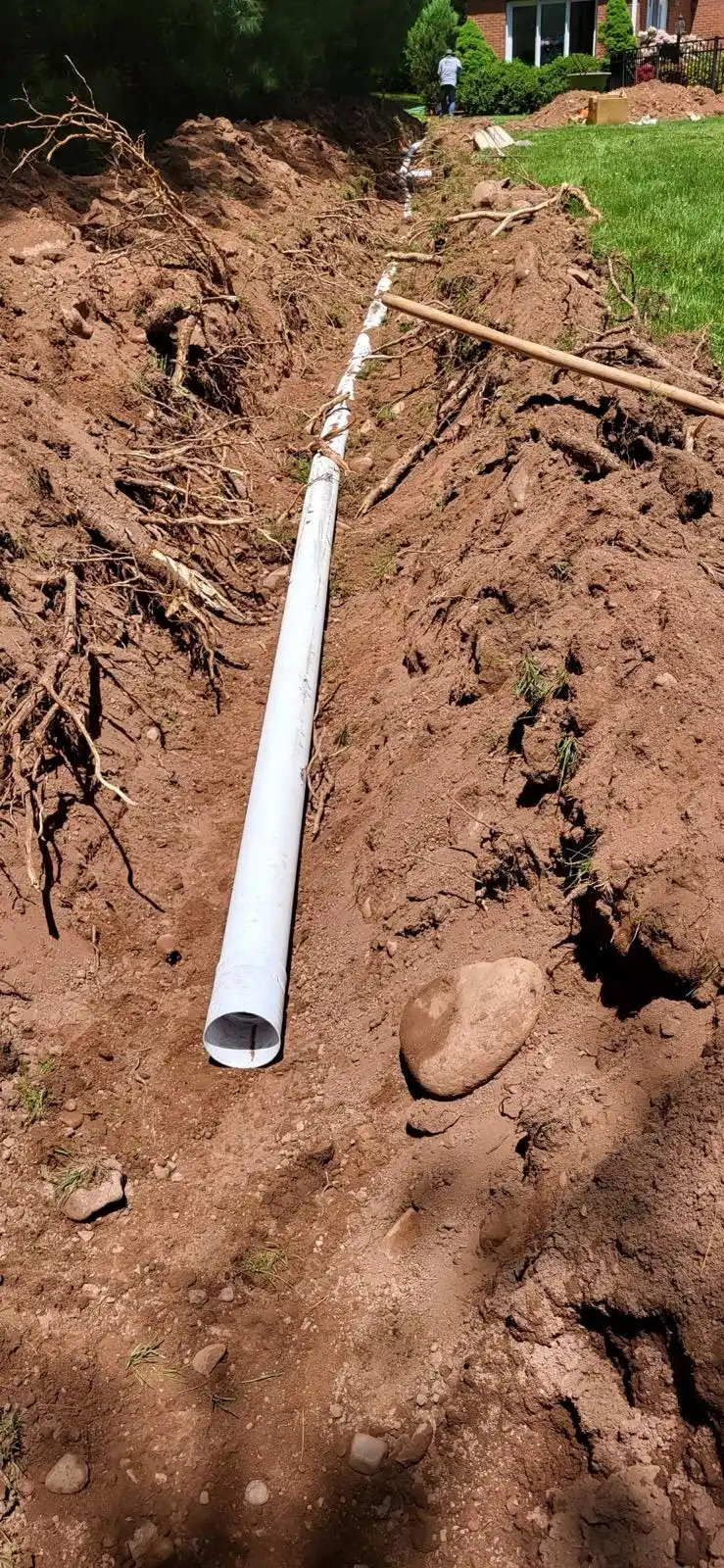
The right fix depends on the cause. When the problem is grading, regrading the yard so it slopes away from the house is usually the answer. When water collects in one low area, a French drain can help. It uses a gravel trench and perforated pipe to carry water away. Downspout problems are solved by connecting gutters to buried pipes that release water far from the foundation. When there’s no slope to work with, a dry well gives water an underground place to soak in slowly. Shallow grassed swales guide runoff around homes and patios. Catch basins collect water at low points in driveways and lawns. Many yards need a combination. The key is matching the fix to the source. That way the water goes somewhere useful, instead of just moving the puddle.
What You Can Check Before Calling a Pro
A little homework helps you understand the problem and get a better answer from a contractor. Walk your yard during or right after a heavy rain and watch where water comes from and where it collects. Check every downspout and note where each one empties. Time how long puddles last. Water that soaks in within a day is normal. Water that sits for several days points to a real drainage issue. Notice whether the problem shows up after every storm or mainly during spring snowmelt. Look uphill, too, since runoff from a neighbor’s slope or a driveway can be the real source. Take a few photos. With that information, a drainage contractor can pinpoint the cause faster and recommend the right fix.